Determining Earth’s ‘lung capacity’ from space
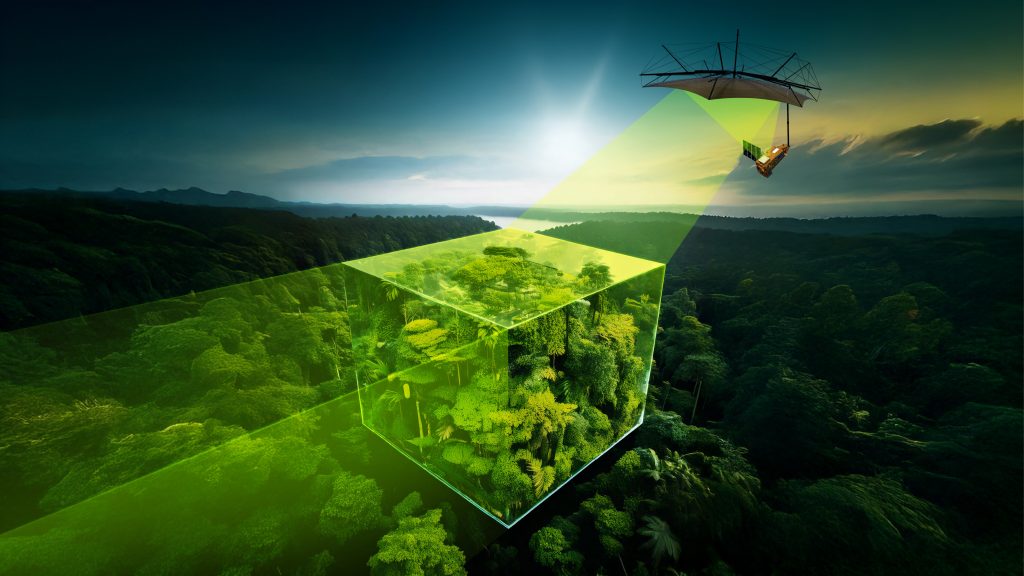
Forests cover approximately 40 million square kilometres, accounting for just under a third of Earth’s ice-free land surface. Often called the ‘green lungs’ of our planet, they supply the atmosphere with fresh oxygen. But what condition is this vital organ of the Earth actually in? Can it continue supplying us with enough fresh air to keep Earth’s ecosystem functioning? To answer these questions, we must above all determine the ‘lung capacity’ of our forests. This is the task of the European Biomass Earth observation mission, which was launched on 29 April 2025.
Until now, the total volume of forest biomass worldwide has been a matter of estimation. The Biomass mission will determine it for the first time – a fundamental contribution to accurately calculating global warming, predicting the consequences of climate change and developing appropriate countermeasures.
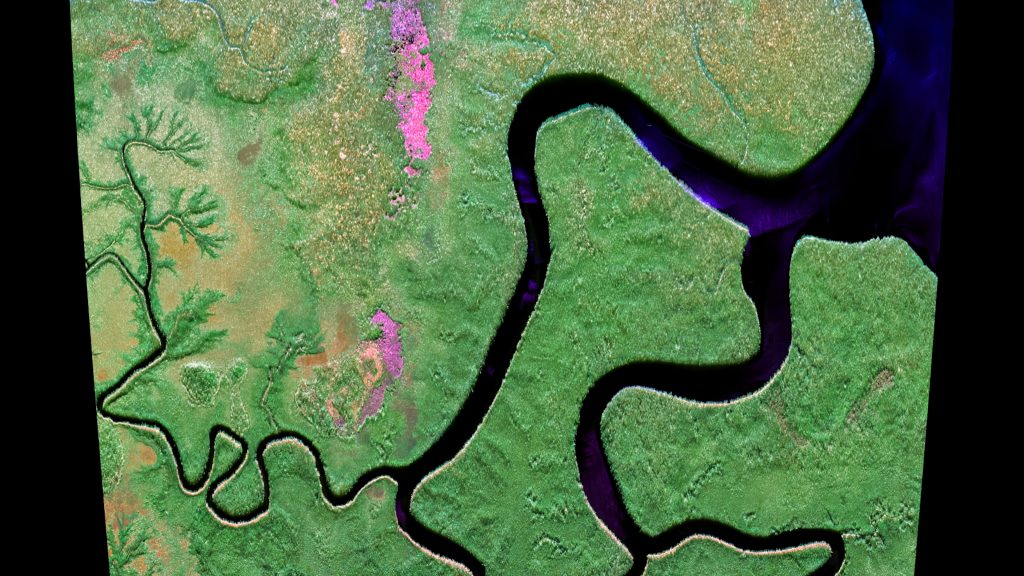
Biomass is the seventh Earth Explorer mission in the European Space Agency’s FutureEO programme, which aims to pave the way for new technologies to enter operational Earth observation. The centrepiece of the mission is the P-Band Synthetic Aperture Radar (SAR) instrument developed in Germany, which is designed to measure the volume of forest biomass as well as the amount and distribution of carbon stored with high precision.
Germany contributes more than 20 percent to the mission and provides the main instrument. These contributions are coordinated by the German Space Agency at DLR on behalf of the Federal Ministry of Research, Technology and Space (BMFTR). The DLR Microwaves and Radar Institute has conducted airborne measurement campaigns for the development of algorithms to estimate forest biomass, and developed the prototype radar data processor and the software simulator for the German radar system.
Link:
German Aerospace Center (Deutsches Zentrum für Luft- und Raumfahrt; DLR)
German Space Agency at DLR
E-Mail contact-dlr@DLR.de