Antenna and electronics unit of the ground-penetrating radar for exploring the lunar subsurface
The Deep Wave Radar is a highly integrated Ground-Penetrating Radar (GPR) designed for exploring the subsurface of the Moon and Mars. Developed for deployment on planetary rovers, it enables non-destructive investigation of near-surface and deeper soil layers as well as hidden geological structures.
The system is based on an FMCW (Frequency Modulated Continuous Wave) radar principle and covers a broad frequency range extending into the gigahertz domain. This allows both fine structures close to the surface to be visualised in great detail and deeper layers to be imaged. Various operating modes enable the radar to be flexibly adapted to different mission objectives. In addition to active measurements, passive radiometric observations are also possible. The compact, modular design facilitates straightforward integration into both small autonomous and large crewed rover platforms. At the same time, the system is highly robust against extreme environmental conditions such as temperature fluctuations and vibrations. It is designed for a service life of ten years.
The Deep Wave Radar is being developed at Technische Universität Dresden. It is intended to be deployed on the Moon as part of the international L-MAPS (Lunar Microwave Active-Passive Spectrometer) instrument aboard one of the future lunar rovers (Lunar Terrain Vehicle; LTV) as part of NASA’s Artemis programme.
The radar is expected to deliver crucial data for understanding planetary surfaces and will support the search for important resources such as water ice. In this way, it contributes to the preparation of future missions, such as the search for suitable sites for habitats.
The project is funded by the German Space Agency at DLR using funds from the Federal Ministry of Research, Technology and Space (BMFTR).
Link:
German Aerospace Center (Deutsches Zentrum für Luft- und Raumfahrt; DLR)
German Space Agency at DLR
E-Mail contact-dlr@DLR.de
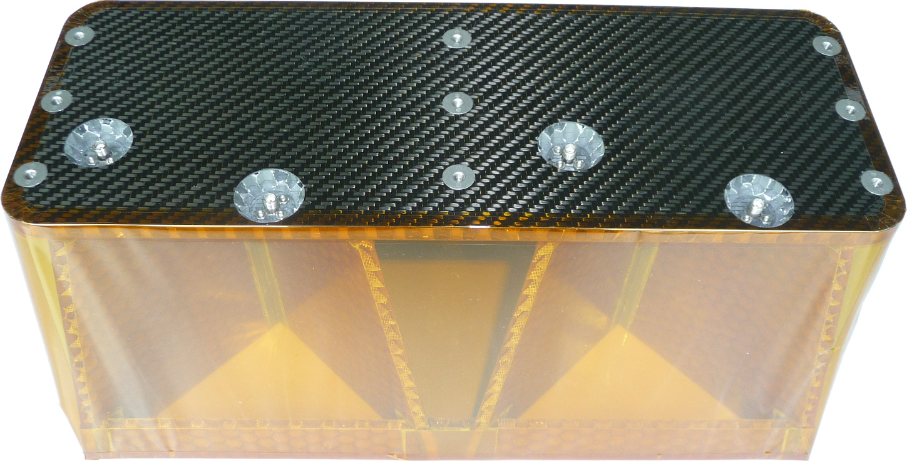
Engineeringmodell der Antenneneinheit für das Deep-Wave-Bodenradar
Quelle: TU Dresden
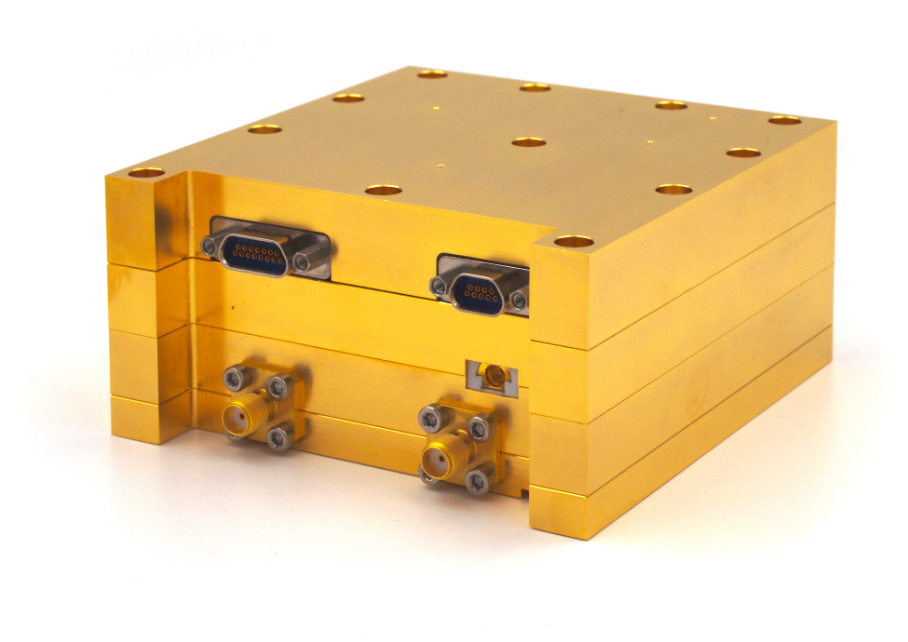
Engineeringmodell der Elektronikbox für das Deep-Wave-Bodenradar
Quelle: TU Dresden