Can we deflect dangerous asteroids?
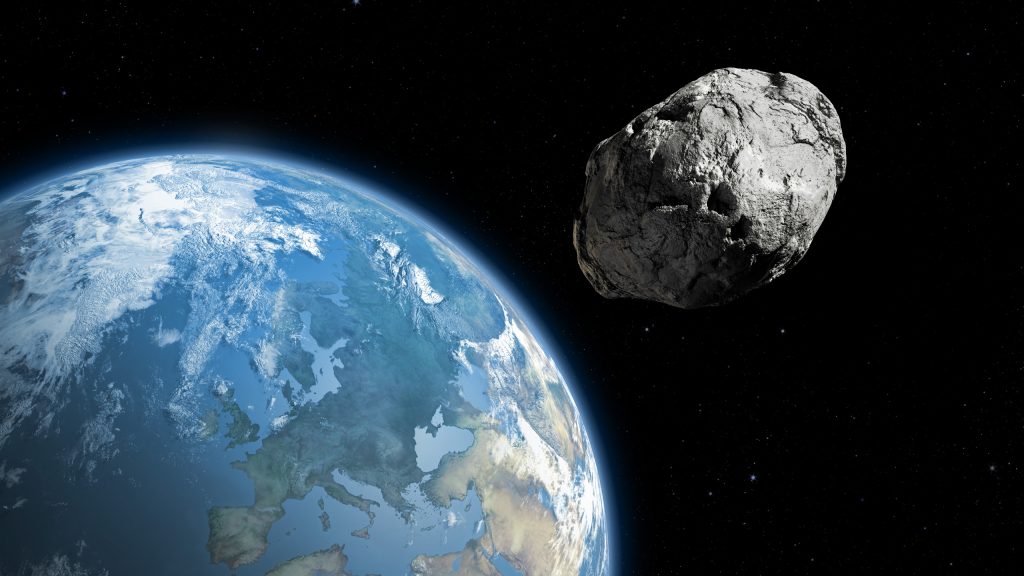
Earth’s history has repeatedly shown how dangerous asteroids can be. Sixty-six million years ago, an asteroid struck Mexico that most likely led to the extinction of the dinosaurs. If a large asteroid were to hit the Earth today, it would pose a threat to our planet and all of humanity – and a devastating impact cannot be ruled out even now. Science fiction films have long imagined technologies capable of preventing such impacts, but can asteroid deflection succeed in real life?
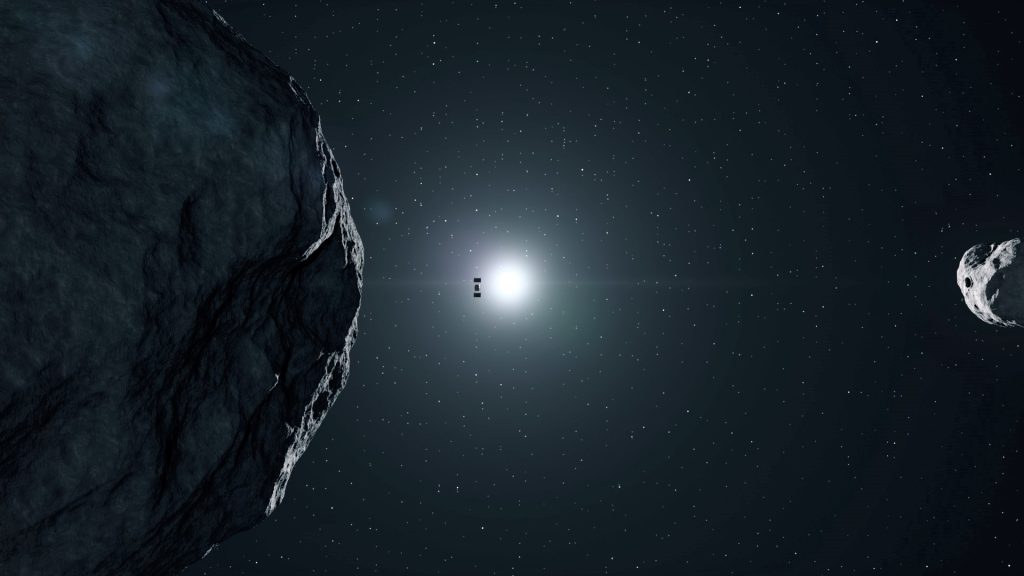
These and many other questions are to be answered by the European Hera mission. Launched in 2024, it is heading for the Didymos and Dimorphos binary asteroid system, following in the footsteps of NASA’s DART (Double Asteroid Redirection Test) spacecraft. In 2022, DART’s controlled impact on Dimorphos shortened its orbital period around Didymos by 32 minutes – bringing it closer to Didymos in the process.
Upon arriving at the asteroid pair in 2026, Hera is set to assess the effects of that impact. Did it form a crater on Dimorphos? Was the asteroid altered as a whole? Was the surface of Didymos also struck by ejecta?
The German Space Agency at DLR is coordinating the German contributions to ESA’s Hera mission with funds from the Federal Ministry of Research, Technology and Space (BMFTR). DLR is scientifically involved through its Space Operations and Astronaut Training facility and the Institute of Space Research. The company OHB in Bremen was responsible for developing and building the Hera spacecraft. Hera will transmit its data back to Earth using a newly developed antenna from HPS GmbH in Munich. The two Asteroid Framing Cameras are supplied by Jena-Optronik. TU Dresden is playing a leading role in the development of the radar experiment aboard the HERA CubeSat Juventas. In addition, German researchers are also involved in the Hera Science Team to analyse the data collected during the mission.
Link:
German Aerospace Center (Deutsches Zentrum für Luft- und Raumfahrt; DLR)
German Space Agency at DLR
E-Mail contact-dlr@DLR.de