Driving the dynamic future market of space
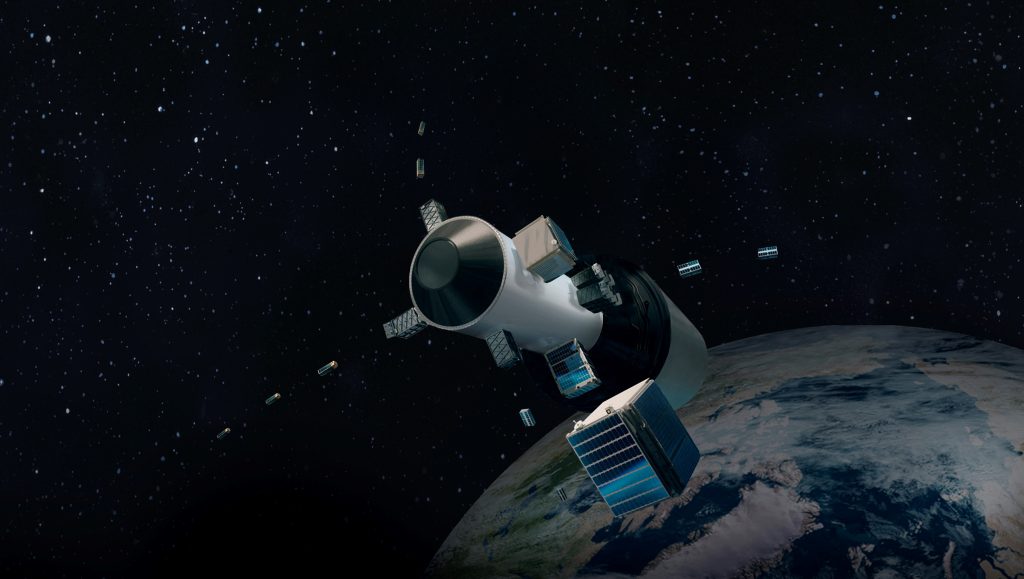
Until about ten years ago, satellites were built primarily large and heavy to carry as many different payloads as possible. Most of these satellites were commissioned by governments. Today, private space companies and universities are increasingly launching mainly small satellites. Studies estimate that more than 15,000 satellites will be launched into space between 2021 and 2030. Approximately 90 percent of these will be small satellites – that is, weighing up to 500 kilograms.
Small satellites are versatile and flexible in their applications – used in telecommunications services, Earth observation and climate research, or testing new technologies in space. They can also be produced in larger quantities and therefore more cost-effectively and quickly than conventional satellites. This opens up a wide range of new opportunities for commercial services and science. Small satellites are therefore one of the key drivers in the dynamic future space market – particularly in the New Space sector – the commercialisation of space.
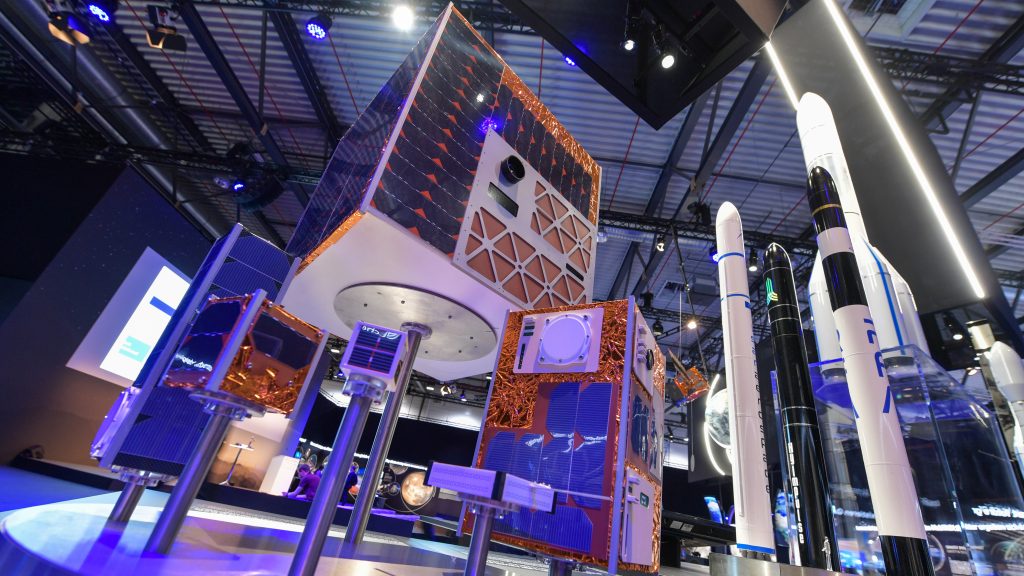
The model displays different classes of small satellites:
- PocketQube (5 cm x 5 cm x 5 cm; maximum mass 0.25 kg)
- 0.25U CubeSat (11 cm x 11 cm x 2.8 cm; maximum mass 0.4 kg)
- 1U CubeSat (10 cm x 10 cm x 11.35 cm; maximum mass 1.33 kg)
- 3U CubeSat (10 cm x 10 cm x 34.05 cm; maximum mass 5 kg)
- 12U CubeSat (22.63 cm x 22.63 cm x 34.05 cm; maximum mass 20 kg)
- Custom 50-kg small satellite
Link:
German Aerospace Center (Deutsches Zentrum für Luft- und Raumfahrt; DLR)
German Space Agency at DLR
E-Mail contact-dlr@DLR.de