Scale models of the three German competitors
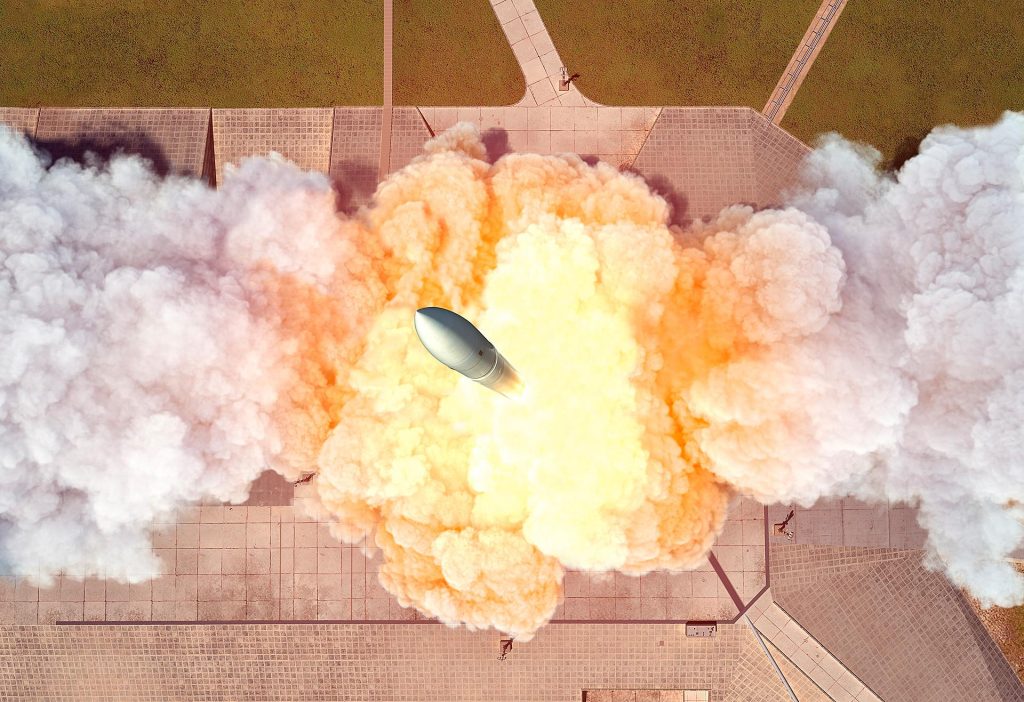
Satellites are becoming ever smaller and lighter. They are typically launched into space as ‘hand luggage’ alongside larger satellites, whose operators set the terms and conditions. A dedicated class of rocket has now emerged to place small satellites into orbit as the primary payload – the ‘microlauncher’. At just under 30 metres in length, these vehicles are roughly half the size of an Ariane 6. The small launcher market is booming in the United States and China, and several German start-ups are developing vehicles for this growing sector.
Europe needs independent access to space. Until recently, this idea was associated exclusively with the Ariane and Vega launchers. However, given global challenges, the increased demand for launches of security-relevant and military satellites and a growing number of civil launches, it is long overdue that Europe has additional launch systems available.
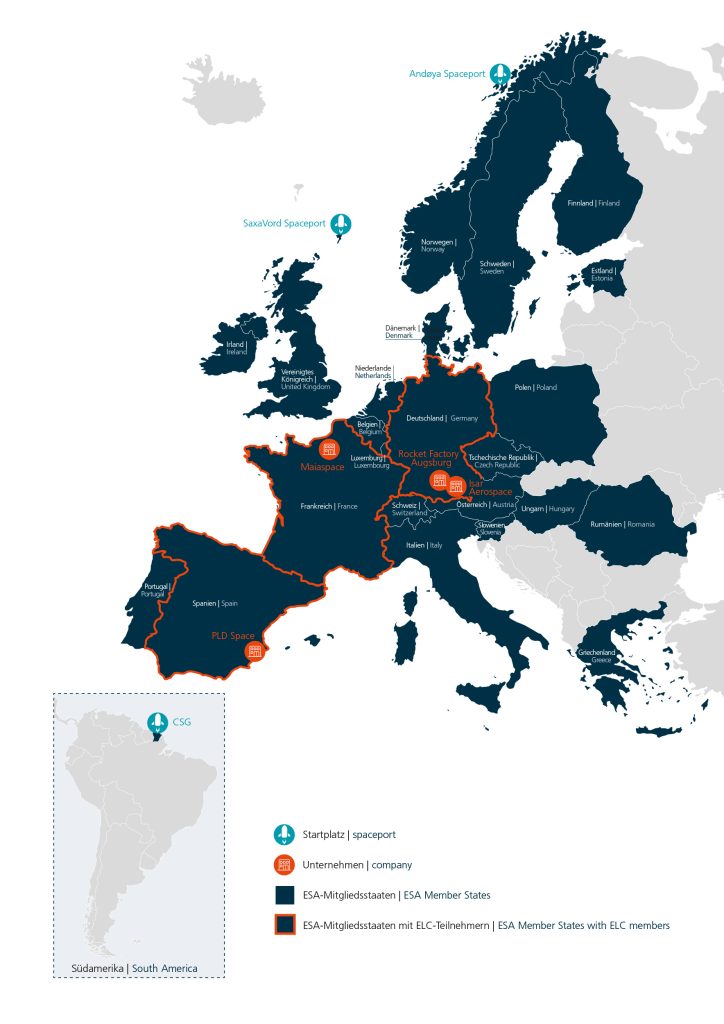
To this end, the European Launcher Challenge – an initiative driven largely by Germany – was adopted at the ESA Ministerial Council in 2025. This competition aims to make private launch service providers from Europe internationally competitive.
For the first round of the competition, ESA selected the German companies Isar Aerospace Technologies SE (with ‘Spectrum’) and Rocket Factory Augsburg AG (with ‘RFA One’), as well as Maiaspace from France and PLD Space from Spain. HyImpulse Technologies (with ‘SL1’) joins as a further German candidate.
The German Space Agency at DLR is supporting these developments with funds from the Federal Ministry of Research, Technology and Space (BMFTR) on behalf of the German government, as well as through ESA’s NewSpace launcher strategy.
Link:
German Aerospace Center (Deutsches Zentrum für Luft- und Raumfahrt; DLR)
German Space Agency at DLR
E-Mail contact-dlr@DLR.de
PDF-Download, 1.1 MB