Shaping the future of German spaceflight together
Whether it is mobile communications, navigation or the weather forecast, countless aspects of modern life depend on technologies from space. Space has therefore become a key driver of technological innovation and Germany’s competitiveness. For this reason, the German Space Agency at DLR has launched the Space Innovation Hub, a platform that brings together start-ups, established companies, investors, public institutions and the scientific community. The Hub offers a unique opportunity for providers of space-related technologies and services to work directly with potential users and to build new partnerships. The aim is to identify needs and develop tailored solutions through the exchange of ideas and expertise, strengthening Germany’s competitiveness and security in space. The focus is on collaboration between public institutions and private sector contributors.
The Space Innovation Hub serves not only as a forum for exchange, but also offers targeted services for companies in the New Space sector. These include consultancy on various topics, including specialist subjects, funding opportunities and business start-up support. The Hub also facilitates connections with venture capitalists and connects space companies with existing networks, helping them identify and benefit from potential synergies. Particularly promising projects – whether in the civil, military or dual-use sectors – are supported through the Space Innovation Hub.
The Space Innovation Hub is accompanied by a future panel of experts, the Space Innovation Board. This body provides recommendations on the Hub’s strategic and thematic direction. The Space Innovation Hub is one of thirteen key projects of the German Federal Government’s Space Strategy, adopted in 2023. It is implemented on behalf of the Federal Ministry of Research, Technology and Space (BMFTR).
German Aerospace Center (Deutsches Zentrum für Luft- und Raumfahrt; DLR)
German Space Agency at DLR
E-Mail: info@spaceinnovationhub.de

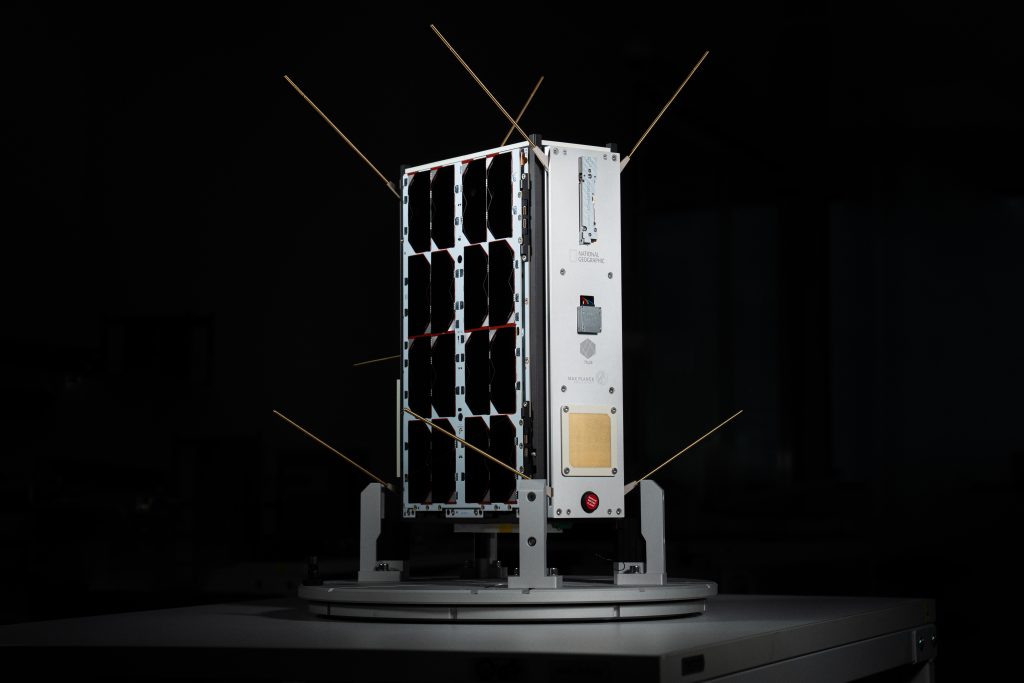
TALOS – integrated satellite-based IoT system
Key technology from Germany: an end-to-end system comprising an IoT tag, a miniaturised satellite payload and a 6U small satellite for secure, scalable IoT communications from space
This exhibit presents an integrated satellite-based IoT (Internet of Things) system developed by TALOS, illustrating the complete technology chain – from the intelligent end device through the communications payload to the orbital platform. On display are a miniaturised IoT tag, a highly integrated satellite payload in 1U format and a 6U small satellite as the carrier platform. Small satellites are categorised in units (U), with 1U corresponding to dimensions of ten by ten by ten centimetres. Together, the three TALOS exhibits at ILA 2026 demonstrate an end-to-end architecture for modern, energy-efficient and scalable IoT communications, designed to meet demanding requirements for range, robustness and availability.
The IoT tag combines satellite-based positioning, bidirectional communications, extensive environmental sensing and a self-sufficient power supply in a highly miniaturised, portable module weighing just four grams. The satellite payload on display integrates key functions for communications, signal processing, data handling and radio-frequency technology into a compact unit. The 6U small satellite demonstrates how this technology can be integrated into an operational space platform. Comparable satellites are also used as part of the ICARUS 2.0 system. The ICARUS initiative was brought to international prominence by the Max Planck Society and provides an important reference framework for the system architecture on display.
The exhibit is linked to the NOVA project of the German Space Agency at DLR, which aims to validate a miniaturised satellite-based IoT system for institutional applications. In the future, the technology is also intended for use in environments where navigation systems are disrupted. The exhibit thus exemplifies the development of capable, miniaturised and independently deployable space technology from Germany, as well as the transition from a validated standalone solution to a scalable system architecture.
Link:
TALOS GmbH E-Mail: info@talos-space.de
GECKO
Next-generation passive satellite-based IoT technology
This exhibit presents a passive satellite-based Internet of Things (IoT) system jointly developed by TALOS and the Dresden University of Technology. It showcases a novel patented approach to robust, long-lasting and energy-efficient data transmission in demanding operating environments. On display is a 1:1 scale model of a passive IoT tag capable of transmitting narrowband data via radar satellites, offering an alternative to conventional, actively transmitting IoT systems. The system is designed for high resilience and long-term usability under harsh environmental conditions.
A key feature of the system is that it operates entirely without a satellite navigation system (GNSS). Instead, positioning and identification are handled by the radar system itself. GECKO therefore addresses applications in which conventional positioning and communications solutions reach their limits or are deliberately to be avoided. The exhibit thus represents a distinct technological approach at the intersection of IoT, radar remote sensing and resilient space communications.
This ILA 2026 exhibit is linked to the GECKO project, which is funded by the German Space Agency at DLR. As part of the project, the underlying technology is being systematically advanced with the aim of producing a functional prototype, improving the system’s technical characteristics and laying the groundwork for future operational use. The focus is on further developing functionality, increasing practical viability and transitioning to an application-oriented system. The exhibit exemplifies the development of innovative, miniaturised and resilient space technology from Germany.
Link:
TALOS GmbH E-Mail: info@talos-space.de
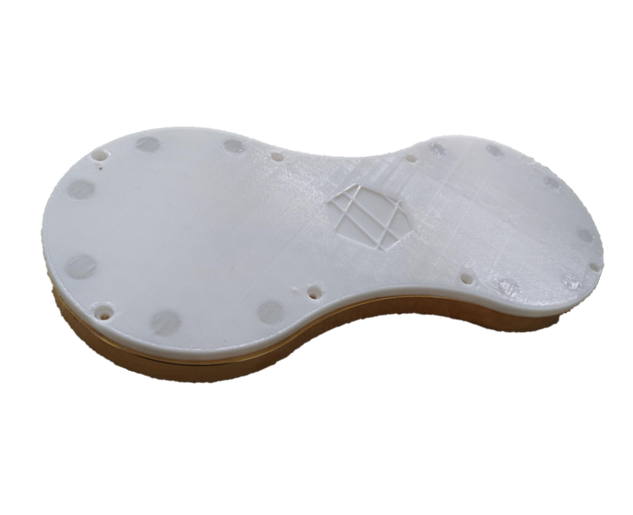
KEAN manpack antenna (3D model)
Foldable antenna for mobile communications via geostationary satellites
This exhibit presents a scaled 3D-printed model of a lightweight, mobile, rapidly deployable antenna with a small packed size. It was developed as a laboratory prototype as part of a project funded by the German Space Agency at DLR.
When fully deployed, the antenna’s reflector has a diameter of 1.2 metres. It consists of 20 interlocking foldable segments, with a total weight of approximately 20 kilograms. The antenna operates in the Ku-band at approximately 12 gigahertz via geostationary satellites, enabling high data rate communications in both directions.
This foldable manpack antenna ensures autonomous communications capability for mobile emergency services or civilian users – for example, those conducting geo-ecological research in remote terrain where no terrestrial communications infrastructure is available. During the development of the antenna, the design was optimised with a particular focus on robust handling, rapid deployment, a small pack size and low weight. Successful communications tests were carried out in 2024 and 2025, including with the German Heinrich Hertz satellite.
Link:
HPS GmbH E-Mail: contact@hps-gmbh.com