Next-generation launch vehicle
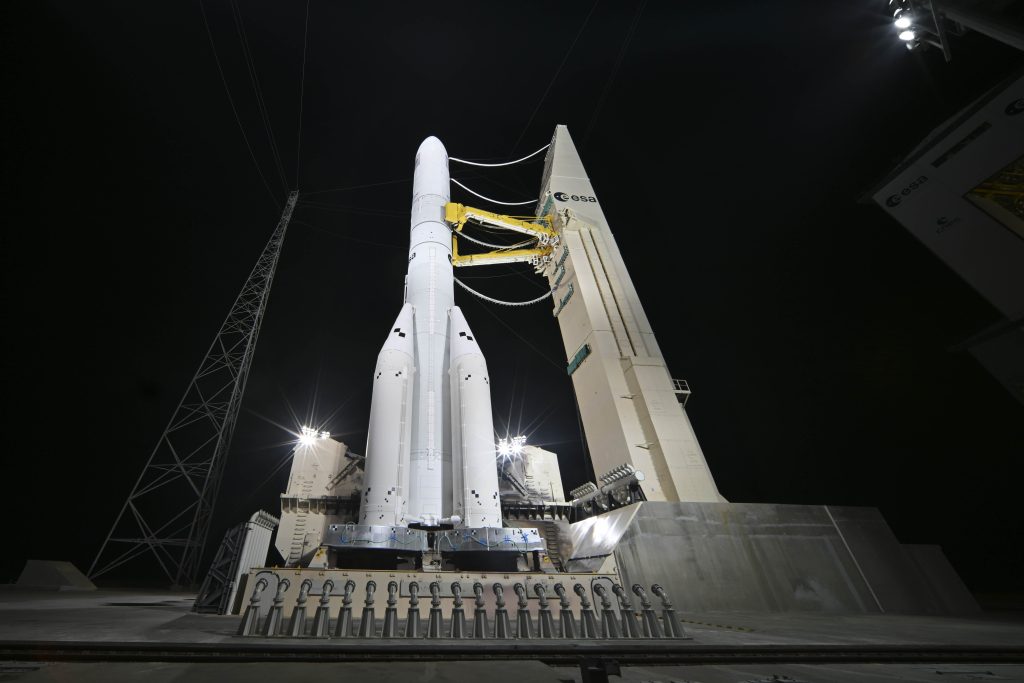
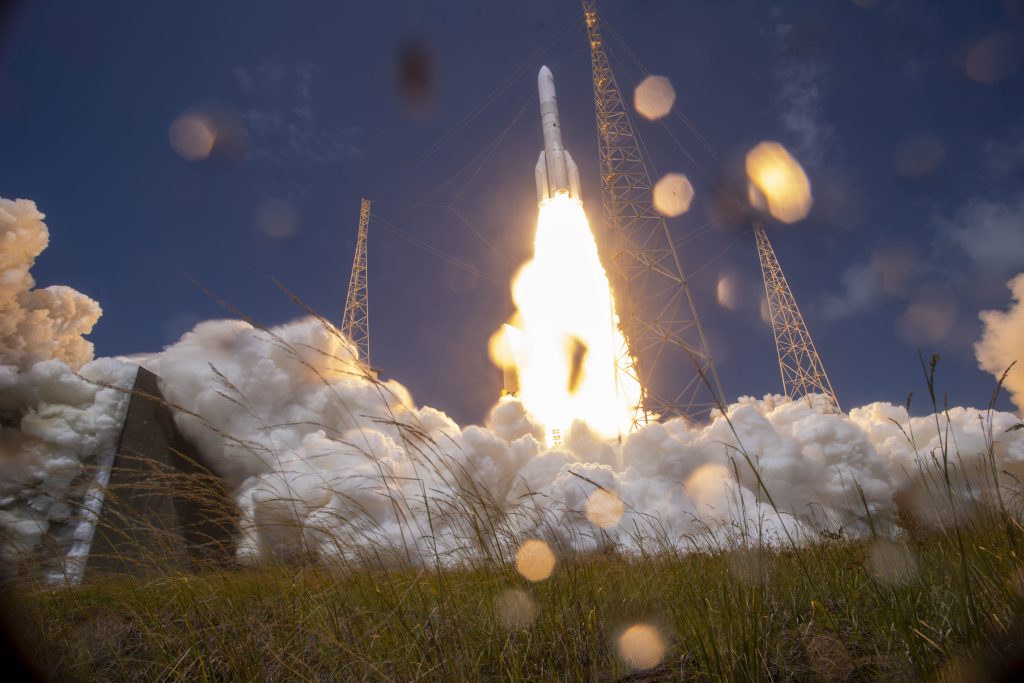
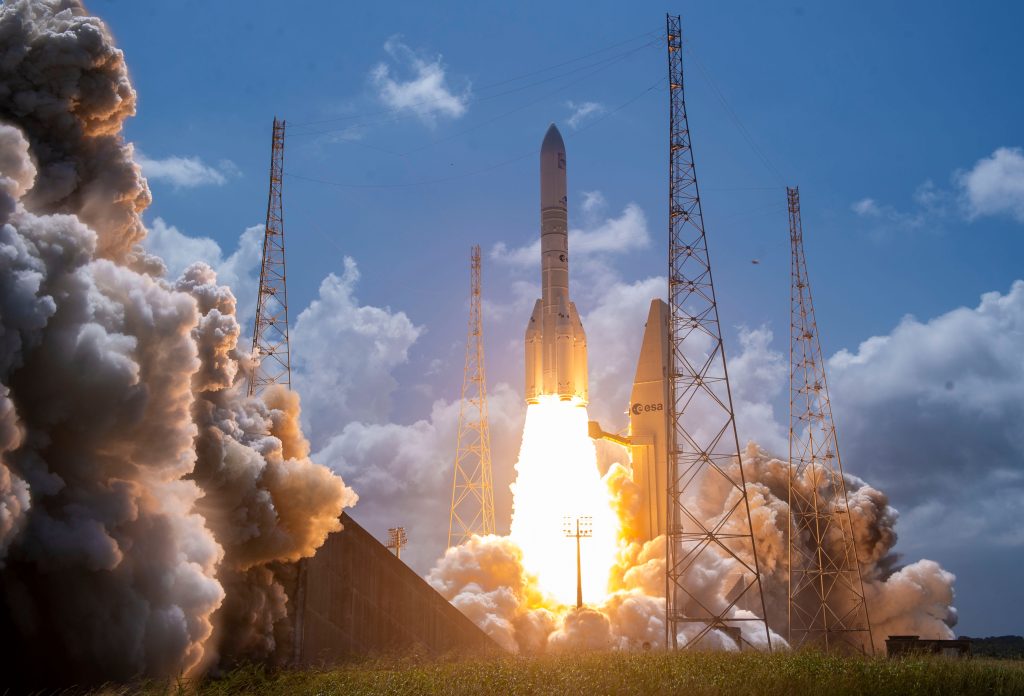
The first Ariane 6 launched into space on 9 July 2024. The Ariane launch vehicles have been technically further developed to continue ensuring Europe’s independent access to space into the future. Cost reductions and the modernisation of the proven Ariane system are key advantages over its predecessor, Ariane 5. A 1:15 scale model of Ariane 6 is on display at the stand of the Federal Ministry of Research, Technology and Space (BMFTR).
Both the lower and upper stages of Ariane 6 are powered by a combination of liquid hydrogen and liquid oxygen. Many components draw on the experience and technologies developed for Ariane 5, for example the main stage, which is combined with a modernised version of the tried-and-tested Vulcain 2 engine. The upper stage is also based on technologies already developed for Ariane 5 ME. This includes, among other things, the re-ignitable Vinci engine, which enables a wide variety of missions thanks to its flexible shut-down and restart capability.
The P120C solid rocket boosters provide greater operational versatility compared to Ariane 5: depending on the configuration, Ariane 6 can be fitted with either two boosters (version A62) or four (version A64), enabling it to carry payloads of various weight classes into space. The booster for Ariane 6 is the same as the first stage of the Vega-C rocket, itself a development of the Vega system.
The prime contractor to the European Space Agency (ESA) for the development and construction of Ariane 6 is ArianeGroup – a joint venture between Airbus Defence and Space and French engine manufacturer Safran. Germany has contributed approximately 23 percent of the total costs of the development programme. The German Space Agency at DLR coordinates Germany’s national ESA budget on behalf of the BMFTR.
Link:
German Aerospace Center (DLR) German Space Agency at DLR
German Space Agency at DLR
E-Mail contact-dlr@DLR.de