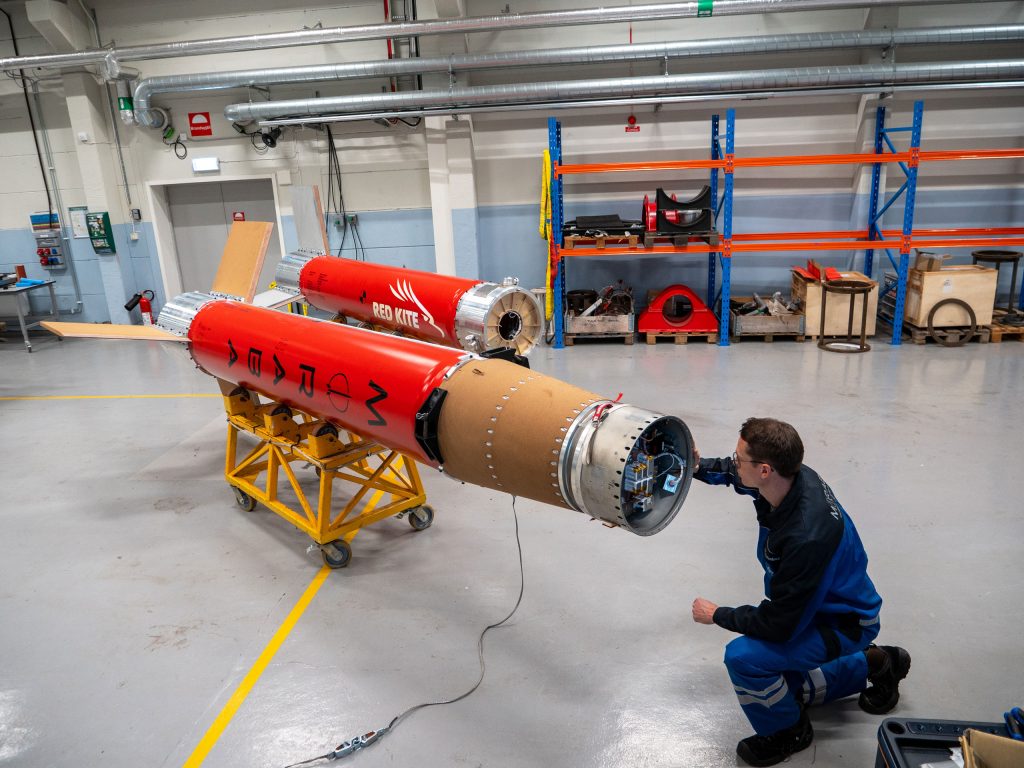
Scale model of a sounding rocket from the Mobile Rocket Base
The Mobile Rocket Base (MORABA) has played a key role in research under space conditions and in the upper atmosphere for nearly 60 years. Sounding rockets can reach altitudes between 30 to several hundred kilometres – a ‘boundary region’ where there are very few opportunities to take direct measurements. This is precisely where our sounding rockets come into play.
On board sounding rockets, industry and research institutions test new technologies under space conditions. These include quantum experiments, innovative 3D printing techniques and the secure, encrypted transmission of health data. Innovative materials and experiments investigating new approaches in medicine, such as cancer therapy, have also flown aboard our rockets. For experiments requiring the unique conditions of microgravity, high speed and extreme temperatures, sounding rockets offer a cost-effective and highly efficient platform.
Since 2023, many missions have flown with the new RED KITE rocket motor, developed in collaboration with the company Bayern-Chemie. Manufactured in Germany, this motor is reliable and enables an independent, rapid supply chain. Transport, export and procurement have all been simplified, resulting in shorter lead times and greater flexibility for research and industry. At ILA 2026, the single-stage rocket model gives a striking impression of just how compact and powerful this platform is.
Link:
German Aerospace Center (Deutsches Zentrum für Luft- und Raumfahrt; DLR)
Space Operations and Astronaut Training
E-Mail contact-dlr@DLR.de
MAPHEUS® / MOSAIC
Module of the MAPHEUS® sounding rocket for CubeSat experiments
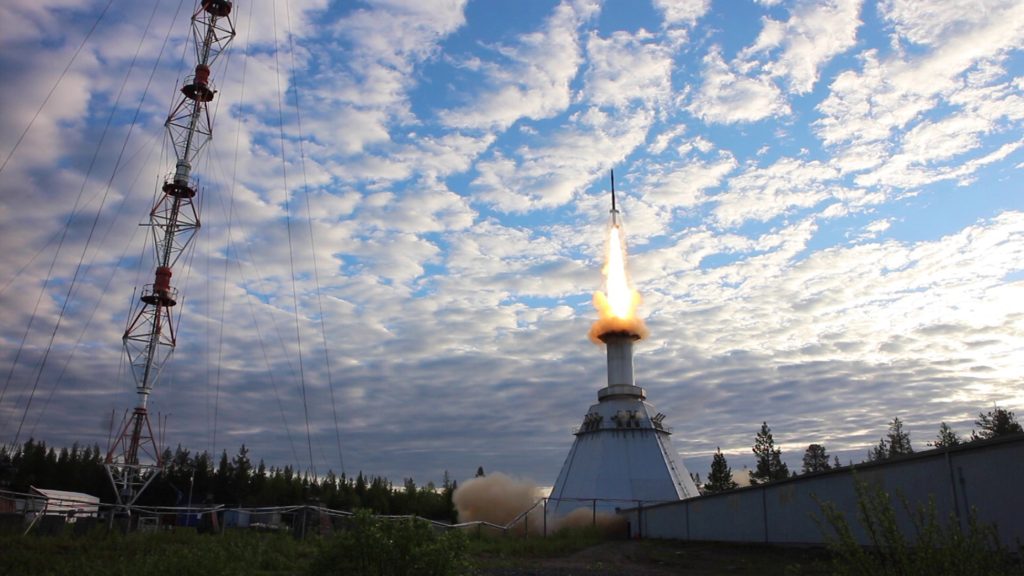
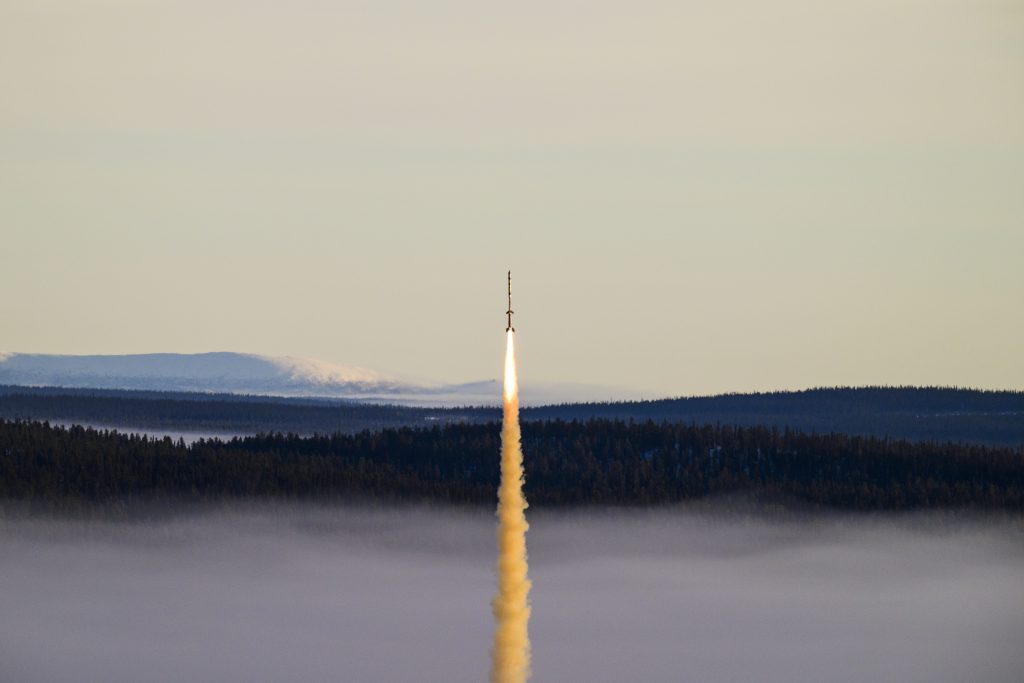
The MAPHEUS rocket programme is our agile research platform for research under space conditions and testing technologies in microgravity. Each suborbital flight of the sounding rockets reaches an altitude of approximately 300 kilometres, providing around seven minutes of microgravity for up to 20 experiments housed in individual segments. The MOSAIC module accommodates up to eight units in CubeSat format measuring 10 x 10 x 10 centimetres, which are integrated via a rail system. This enables a low barrier to entry for experiments conducted in space.
Examples of experiments already flown aboard MOSAIC include the study of model organisms in microgravity, the testing of components for secure communications using cutting-edge cryptographic methods, and measurements of electron density in the upper layers of the atmosphere to investigate the effects of space weather on communications and navigation.
Link:
German Aerospace Center (Deutsches Zentrum für Luft- und Raumfahrt; DLR)
Institute for Frontier Materials on Earth and in Space
E-Mail contact-dlr@DLR.de
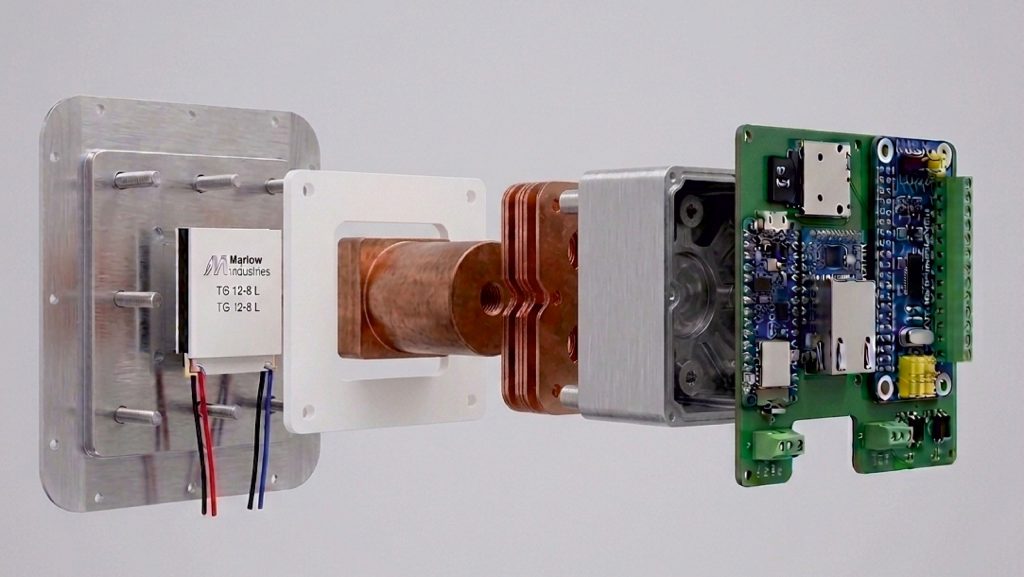
MAPHEUS-TEG 15
Self-sufficient space sensors powered by thermoelectric generators
Modern rockets are equipped with hundreds of sensors and an elaborate network of cables – all of which add weight, require space and increase maintenance costs. But what if sensors could simply draw their energy from the heat of the rocket’s surface, without the need for batteries or cables?
This is precisely what the original flight hardware of the TEGonaut experiment demonstrates, which flew to space in 2024 aboard the DLR research rocket MAPHEUS-15. On display – arranged like an exploded diagram – are all the core components: a section of the actual rocket casing, a thermoelectric generator module (TEG), a heat storage unit filled with phase-change material and the measurement electronics.
The principle: as the rocket travels through the atmosphere, air friction heats the outer skin to temperatures over 200 degrees Celsius. A TEG module is positioned between this hot surface and a cooling element, and converts the heat flow – generated by the temperature difference across the module – directly into electrical current. This happens without any moving parts, silently and without maintenance. During flight tests, the module generated an output of approximately 600 milliwatts – significantly more than a sensor node actually requires.
DLR has also demonstrated that this principle works at a smaller scale. Miniaturised TEG modules with a contact area of less than one square centimetre generated between 80 and 435 milliwatts during flight tests, depending on the heat sink. For comparison, 56 microwatts are sufficient to power a basic sensor node – an output that a TEG module can already achieve at a temperature difference of just 1.6 Kelvin. Using this approach, over 15,000 acceleration measurements were recorded in five minutes of flight and transmitted via radio signal using a TEG module barely larger than a fingernail – entirely self-sufficient and requiring no external power supply.
In the long term, this technology could open up new possibilities not only for spaceflight, but wherever heat is generated and monitoring sensors are needed – including aviation, industry and energy technology.
Link:
German Aerospace Center (Deutsches Zentrum für Luft- und Raumfahrt; DLR)
Institute of Frontier Materials on Earth and in Space
E-Mail contact-dlr@DLR.de
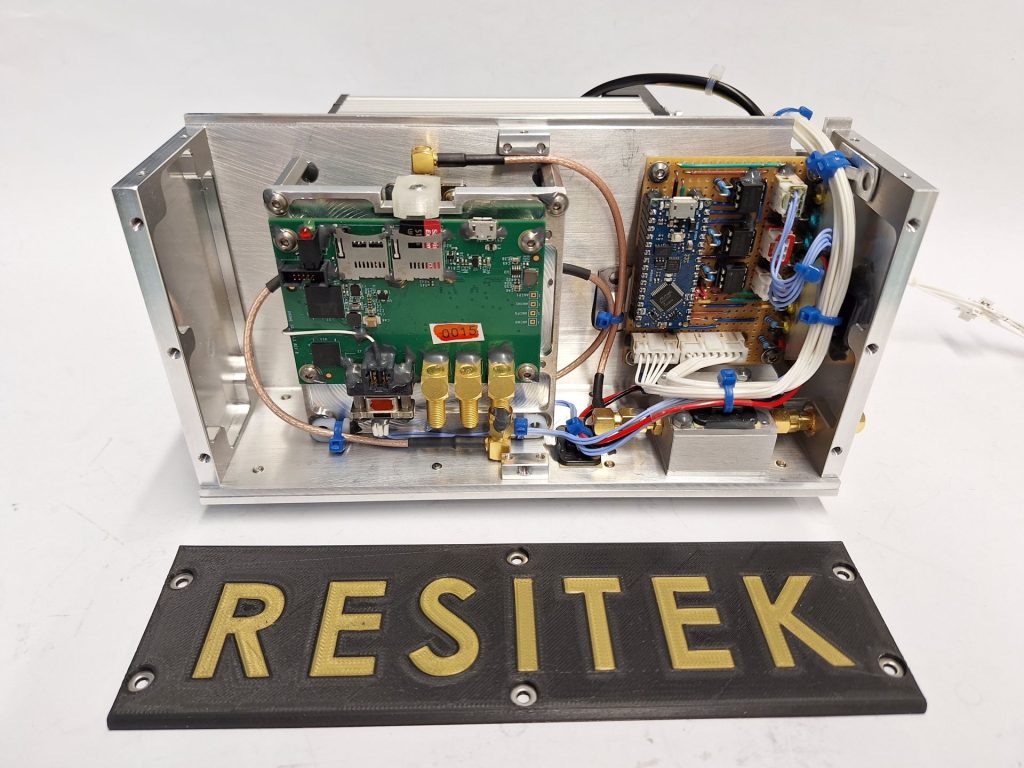
RESITEK GNSS
Receiving GNSS signals for space weather observation
For most people, the weather forecast is part of everyday life – whether it is a quick glance at a smartphone weather app in the morning or watching the news at the end of the day. However, we hear about space weather and solar storms far less often. During periods of peak solar activity – such as in autumn 2024, when auroras were even visible across large parts of Germany – space weather became a topic of daily conversation. After all, just like weather on Earth, space weather can also affect our daily activities.
We are conducting extensive research into the interactions between the Sun and near-Earth space, analysing space weather phenomena and investigating the implications for people, technology and infrastructure – as well as exploring ways to reduce the negative impacts of space weather.
As part of the RESITEK project (Resiliente Technologien für den Katastrophenschutz, in English ‘resilient technologies for disaster control’), methods for monitoring space weather are currently being further developed. Signals from Global Navigation Satellite Systems (GNSS) play an important role in this. These GNSS signals are available worldwide and are one of the primary sources of space weather observations. They can be used to map the electron content of our atmosphere, which can fluctuate significantly due to space weather. One important parameter is the vertical structure of electron content across different atmospheric layers.
However, receiving GNSS signals on the ground does not allow the vertical structure to be observed directly. As part of the RESITEK project, GNSS signals in near-Earth space were recorded along the flight paths of sounding rockets. These rockets, part of DLR’s MAPHEUS programme, offer a unique opportunity to observe the E layer – at altitudes of 90 to 120 kilometres. The GNSS-RESITEK receiver unit was specifically developed for observations on MAPHEUS missions and has already been successfully deployed. Initial findings on fluctuations in the E-layer over northern Scandinavia have already been obtained.
Link:
German Aerospace Center (Deutsches Zentrum für Luft- und Raumfahrt; DLR)
Institute for Solar-Terrestrial Physics
E-Mail contact-dlr@DLR.de