A German small satellite aboard Artemis II
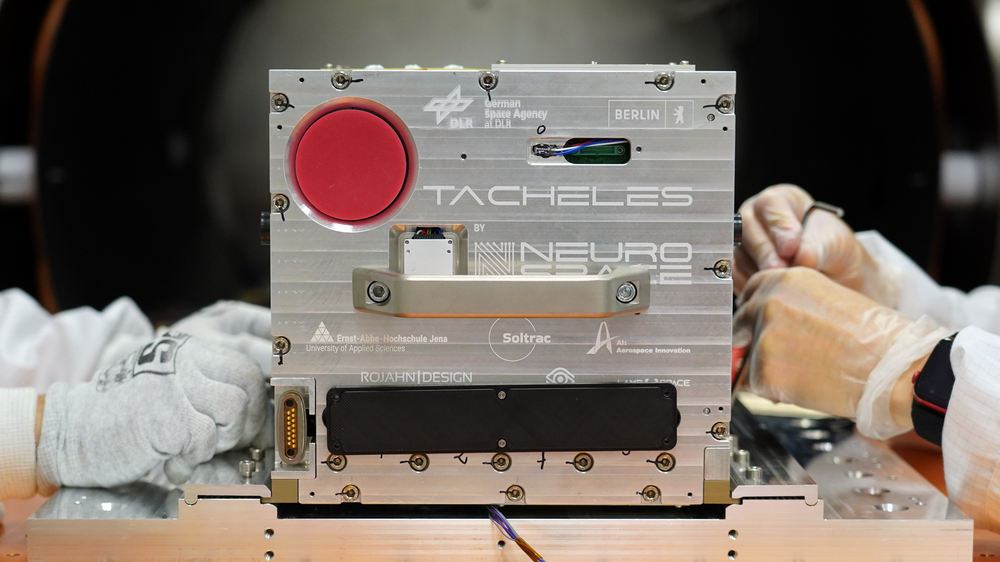
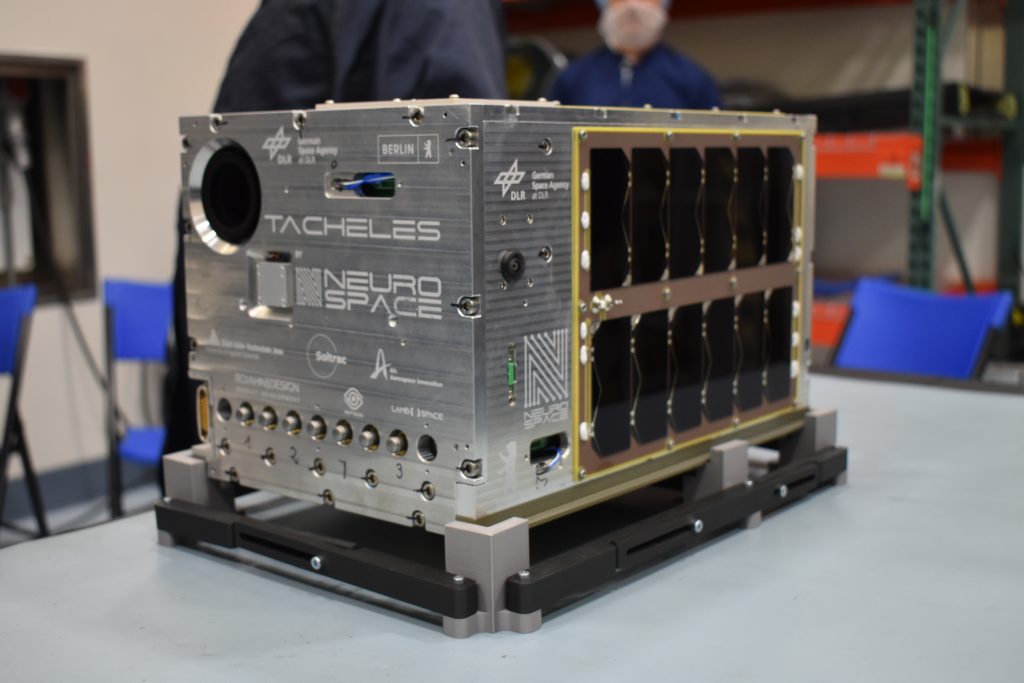
On board the Artemis II mission was a German small satellite selected by the German Space Agency at DLR and supported with funds from the Federal Ministry of Research, Technology and Space (BMFTR). The TACHELES CubeSat, developed by the company NEUROSPACE in Berlin, was handed over to NASA on 16 September 2025 and shortly afterwards integrated into the stage separation adapter of the Orion spacecraft. The small satellite was released as planned and transmitted data to various ground stations. This data is being used by the Berlin-based start-up to further develop their rover system. A model of the satellite and rover will be on display at ILA 2026 in the Space Pavilion.
TACHELES is used to test the electrical components of a future rover in space. In particular, the influence of space radiation when passing through Earth’s two radiation belts – the Van Allen belts – is considered particularly critical for such systems. The Artemis II flight in early April 2026 offered a unique opportunity to collect data on the radiation belts and their impact on the CubeSat’s electronics. The new findings will also be made available for scientific research. For example, the SELDOM (Single Event Latchup Detection On Moon) experiment, developed by the University of Applied Sciences Jena (Ernst-Abbe-Hochschule Jena; EAH Jena), was integrated into the German small satellite. This gave the university the opportunity to test a technology designed to protect spacecraft electronics from sudden disruptions caused by space radiation.
Link:
German Aerospace Center (Deutsches Zentrum für Luft- und Raumfahrt; DLR)
German Space Agency at DLR, Department for Robotics, Digitalisation and AI
E-Mail contact-dlr@DLR.de