WingMates
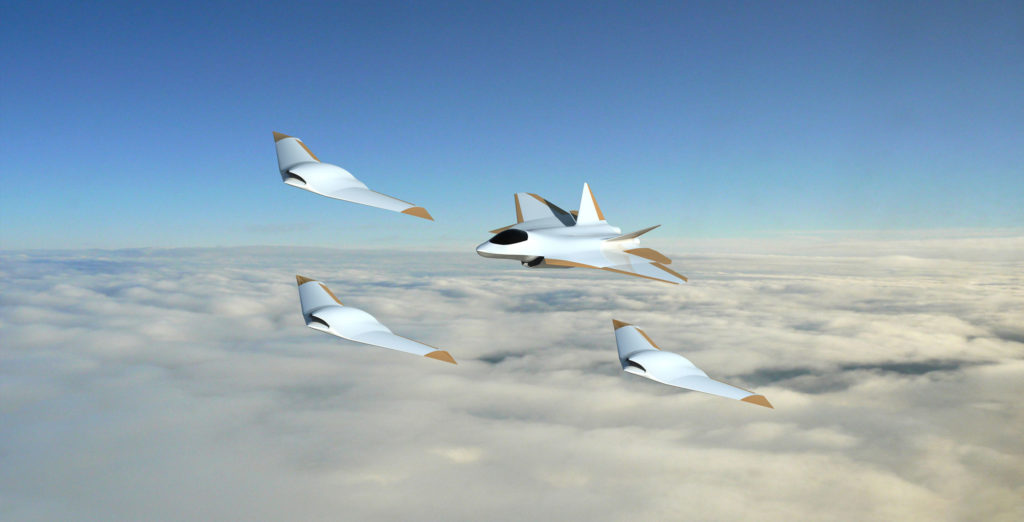
Concept studies for a highly agile next-generation combat aircraft (Command Fighter) and an uncrewed flying wing configuration (Remote Carrier) for military flying formations
The German Aerospace Center (DLR) is advancing the development and evaluation of future combat aircraft through its WingMates research project. The project focuses not only on the multidisciplinary design of individual aircraft configurations, but also on the development of networked defence systems combining crewed and uncrewed platforms.
Future Fighter Demonstrator – a vision of a next-generation combat aircraft
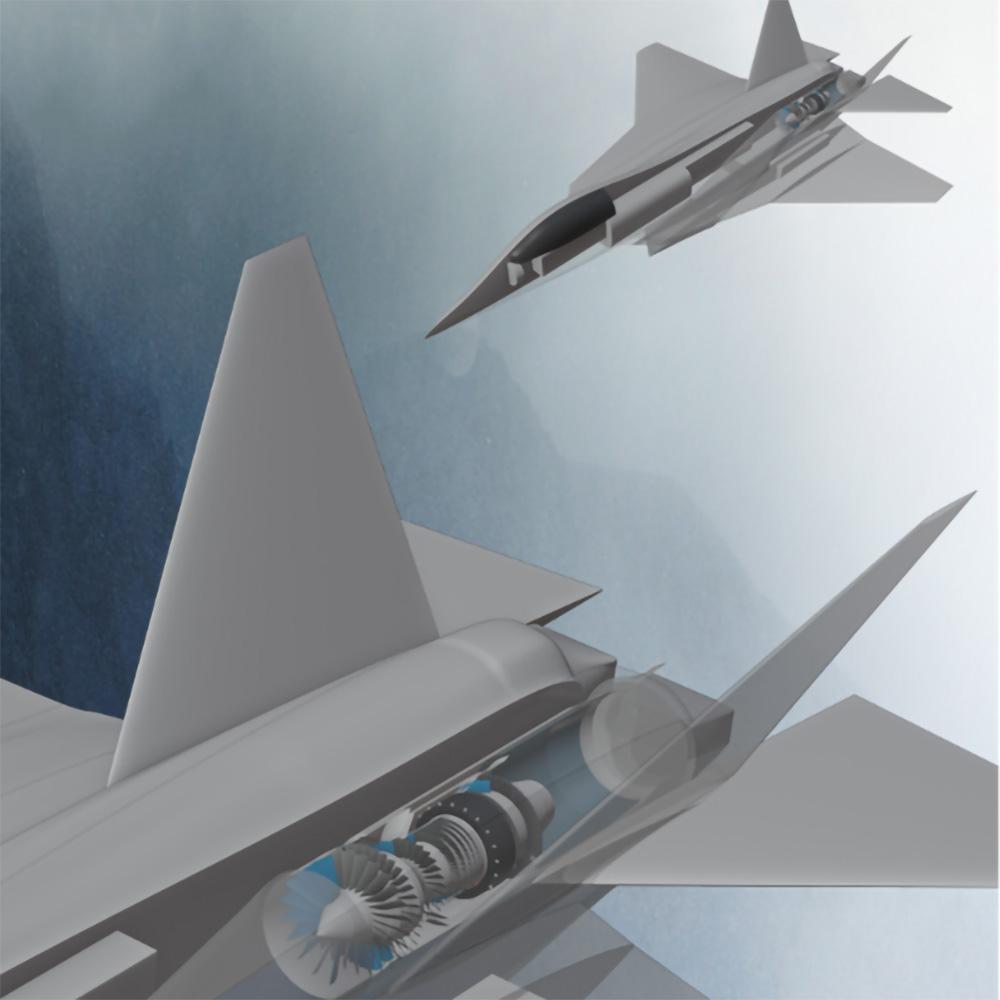
The Future Fighter Demonstrator represents the next generation of highly agile combat aircraft. Based on a comprehensive catalogue of requirements developed in coordination with the US Department of Defense, a concept has been created in the size class of the Lockheed Martin F-22. The design features internal weapon bays, a specially developed engine and ‘bump’ inlets to optimise airflow into the engine ducts. This combat aircraft is not designed solely as a stand-alone system, but can operate in conjunction with other platforms. The goal is to demonstrate the design and evaluation capabilities of technologies developed at DLR whilst closing key technological gaps.
MULDICON – low visibility through flying wing technology
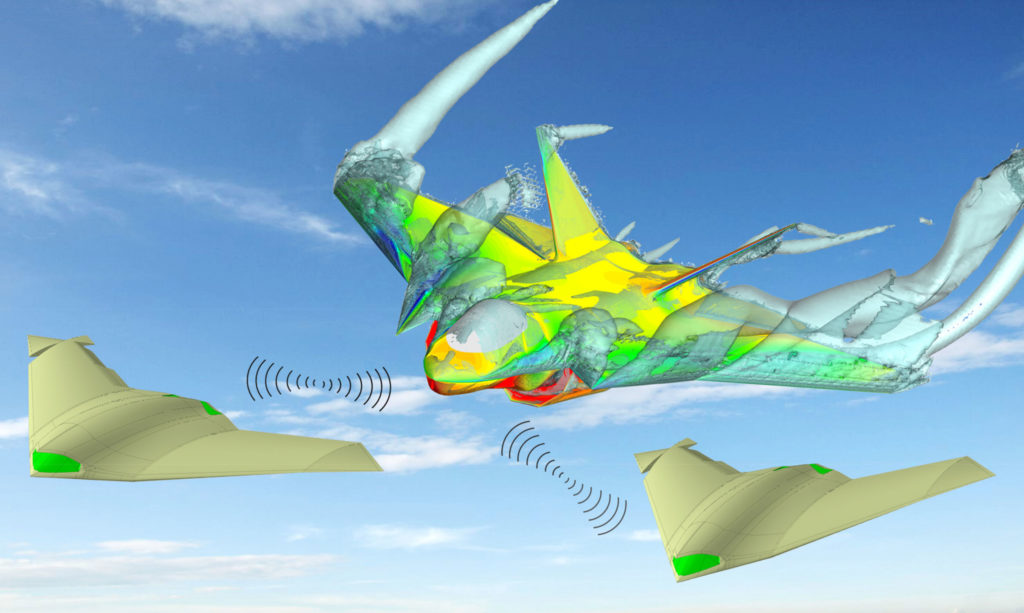
In parallel, the MULDICON (MULti-DIsciplinary design CONfiguration) concept study has developed an uncrewed flying wing aircraft (UCAV – Uncrewed Combat Air Vehicle), characterised by high aerodynamic efficiency and reduced radar visibility. These characteristics make the design particularly suitable for use in cooperative defence formations, where digital networking and semi-autonomous systems play a key role.
Pioneering concepts for networked systems
DLR’s research aims to meet the demands of modern air defence systems, which increasingly rely on cooperation between crewed and uncrewed units. The WingMates project therefore investigates not only the development of individual aircraft, but also the integration of multiple platforms into a unified system.
Link:
German Aerospace Center (DLR)
DLR Institute of Aerodynamics and Flow Technology
E-Mail contact-dlr@DLR.de
Future Fighter Engine Evolution FFE²
Ganzheitliche Bewertung militärischer Flugtriebwerke
Mit dem Projekt Future Fighter Engine Evolution (FFE²) bauen wir die unabhängige Analyse- und Bewertungsfähigkeit für die nächste Generation militärischer Flugtriebwerke und integrierter Antriebssysteme aus. Unser Ziel ist es, zentrale technologische Grundlagen für zukünftige Luftkampfsysteme bereitzustellen. Im Fokus steht dabei nicht nur die Triebwerksentwicklung selbst, sondern ein Systemverständnis für das Zusammenwirken von Antrieb, Zelle, Mission und Vernetzung .
Das Projekt deckt ein breites Entwicklungsspektrum ab: Triebwerkstechnologien im Kontext des „Common Core“-Konzepts für konventionelle Triebwerke, für Antriebe mit variablem Kreisprozess (VCE) sowie für UAV-Anwendungen im Sinne eines „Common Gas Generators“. Untersucht werden skalierbare Antriebsarchitekturen, die pilotierte wie auch autonome Plattformen in kooperativen Verbänden (System-of-Systems) unterstützen.
Darüber hinaus führen wir Untersuchungen zur Integrierbarkeit von Triebwerken in optimierte Flugzeugkonfigurationen durch. Weitere Schwerpunkte sind integrierte Einläufe und deren Einfluss auf die Fan-Auslegung, den Gesamtwirkungsgrad, das Signaturverhalten sowie die Wechselwirkungen mit der Flugzeugzelle. Im Bereich der Methodenentwicklung werden numerische und experimentelle Verfahren für militärische Triebwerkskomponenten weiterentwickelt. Im Heißgasbereich liegt der Schwerpunkt auf gestuften Brennkammerkonzepten, hochbelasteten Kühlsystemen sowie keramischen Hochtemperaturkomponenten.
Insgesamt schafft FFE² damit eine methodische und technologische Grundlage, um zukünftige Antriebssysteme in multidisziplinäre Flugzeug- und Verbundsystementwürfe zu integrieren und deren Leistungsfähigkeit im Kontext vernetzter Einsatzszenarien bewerten zu können.
Deutsches Zentrum für Luft- und Raumfahrt (DLR)
Institut für Antriebstechnik
E-Mail contact-dlr@DLR.de